University News Last updated 05 December 2025
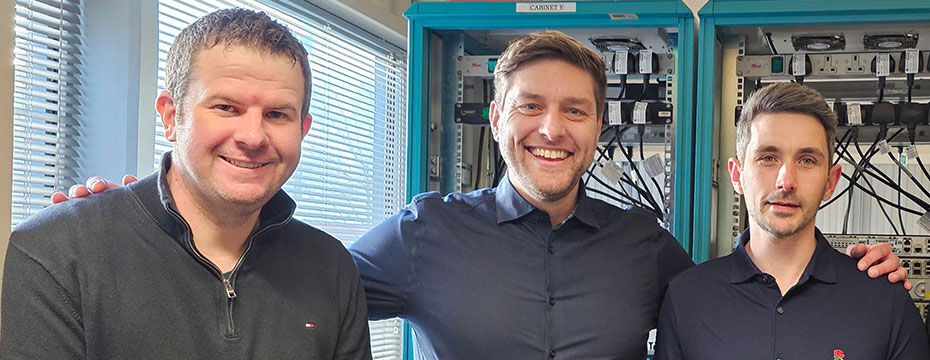
Three Computing graduates returned to campus last month to talk to students about their experiences since leaving university to now in the ever-changing industry that is Computer Science. We sat down with them to reflect on their journeys.
After meeting on their first day of university, the trio quickly formed a close bond, and their reasonings for choosing BCU showed their like-mindedness early on.
Rob Black came from Glasgow to study BSc (Hons) Computer Networks and Business in 天美传媒: 鈥淭he other universities I visited were very old school, red brick, and didn鈥檛 look very technical, whereas BCU was a modern campus with all the computer equipment.鈥�
Cavan Arrowsmith, originally from 天美传媒, stayed local and studied BSc (Hons) Computer Networks and Security: 鈥淚 wanted a vocational degree that was hands-on with labs. I liked the fact that there was the Cisco Certified Network Associate (CCNA) accreditation wrapped into it as well, so there's almost an industry flavour certification to it. I thought in my CV it would look far more attractive to employers rather than just a generic computer science course.
鈥淭he campus was set up close to central 天美传媒, so I could move to the city centre and enjoy what the city has and live student life.鈥�
Matthew Smith move from Sundridge to 天美传媒 to study BSc (Hons) Computer Networks and Security.
鈥淚 remember Millennium Point standing out as being more modern than other universities even 20 years ago,鈥� Matthew said.
BCU gave them the foundation they needed, plus the confidence and ability to grow into successful professionals.
Rob, who is the Head of Pre-Sales with Capgemini, recalls his experience breaking into the workforce: 鈥淏CU was a door opener. I didn't go into a graduate scheme; I was looking for any job that had some sort of relative subject matter to kind of what I knew. So, my first job was with Capgemini working in the data centre in Bristol doing 24-7 shift work. I was around servers, I was learning, I was running data centres, cabling things up, resetting servers and switches.
鈥淭he big thing for me was that it was looking at the degree from the university got me an interview, got me in for a conversation, and I went to interview, and they accepted me straight away.鈥�
Cavan is currently the EMEA Director at Turnkey Consulting and recounts his industry placement impacting his professional development.
He explained: 鈥淲hen I started at BCU, I knew that I wanted to do the industry placement year and use the third year to get some relevant business experience. I left university with a first-class degree, and I ended up working for the company I got placed in the final year, two days a week, part-time.
鈥淔or me, that was the real starting point. I thought that I wanted to go down a technical route. But what's interesting now, I'm still in cybersecurity 15 years on, but I'm no longer hands-on. I'm more on the strategic side of cybersecurity. I owe it all to that starting point here at BCU.鈥�
Matt is currently a Chief Information Security Officer and Advisory Board Member at University of Gloucestershire. He explains how his degree from BCU gave him the foundation to succeed in the industry.
鈥淚 loved the course and the technical side of the degree and enjoyed studying here. When I left university, I wanted to carry on doing a technical job. But the longer you're in industry, the harder it is to stay technical. So, for me, the degree was the foundation of what I wanted to do. It was the knowledge I wanted to gain, it was the information I wanted to have, and it led me to the jobs and occupation that I wanted to do.鈥�
The trio talked about their years of experience in the industry and how the landscape has shifted from when they graduated to today. They emphasised the importance of staying informed about evolving technologies, particularly with the rise of AI, while maintaining a broad perspective of the industry rather than becoming specialised.
In Rob鈥檚 role, he needs to stay up to date with trends, tools, and industry expectations to engage confidently with clients and stakeholders. Matt adds that technologies can rise and fall with hype, and the most durable skills are the core principles learned early on, which allow professionals to adapt and troubleshoot as new technologies emerge. Cavan notes that while it鈥檚 valuable to follow specific technologies that spark personal interest, it鈥檚 equally important to keep perspective on why they matter, how they solve real problems, and to apply a critical mindset rather than accepting hype at face value.
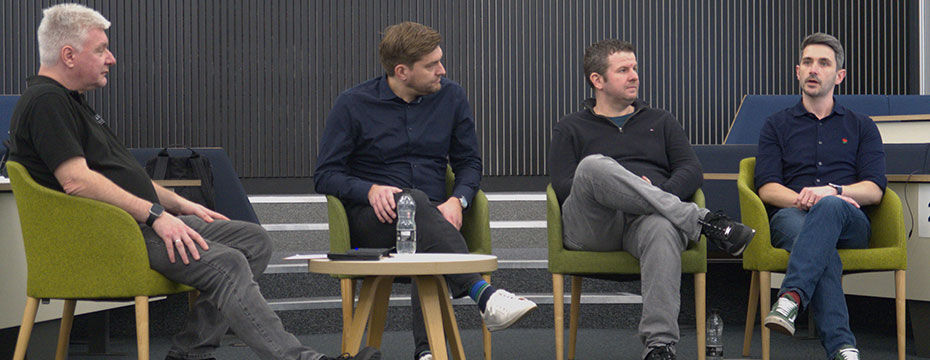
The graduates offered their advice to prospective and current students on how to navigate their studies and the industry.
鈥淢y general advice when coming into the industry, whether it's being a technical specialist or not, I think it's just making sure that you think about all the other skills,鈥� Matt said. 鈥淚 love the technical side, I love being hands-on, but I wouldn't have got very far if I didn't start thinking about my presentation skills, if I didn't think about how I'd work with others, if I didn't think how I wanted to almost tell a story. I think anyone coming out of university should be thinking about not just their academic achievement, but what they can bring to a graduate role or their actual first placement to work. Getting work experience is a definite advantage.鈥�
Cavan鈥檚 advice is to be open minded: 鈥淲hen you're going out into industry, you may have an idea as to what you want to do. You might not have an idea but explore the opportunities and bring a good positive attitude. You might think as well from a technical perspective, you might know an awful lot of information. But when you're going out into industry the reality is you could be the best technical specialist out there, but there's also another softer side to work. Be open-minded to realise that you might have a vision of a particular path you're going to take, but that might vastly change.
鈥淚 remember chatting with Rob and Matt, we all had a vision that we'd be in a very technical role. Imaging what success would look like after university. We'd be in technical roles in computer networks. We'd have a Ford Mondeo in a nice comfortable house, earning a modest salary. I look at it and go, if we'd have been really fixated on that, we wouldn't have said yes to the opportunities that were presented along the way.鈥�
Rob adds: 鈥淔or me, it's that widening that net of skills. Honestly, when we look at graduates and people coming out looking for jobs, one of the things we look at is 鈥榟ave they worked?鈥� So, the biggest advice I'd say is alongside the course and everything you're doing is make sure you have experience of working somewhere and you combine those two, you become extremely employable.鈥�
Matt, Rob and Cavan share how it feels to be back on campus and giving back to BCU after 16 years.
Matt said: 鈥淚t鈥檚 really nice to come back.鈥�
Cavan felt a flood of excitement and nervous energy at being back. 鈥淏eing here is bringing back the old memories. In my head, I鈥檓 vividly imagining us sitting back down at these computers, plugging in the routers.
鈥淥ne thing I'd look back at, my career that's spanned over the last 16 years, I owe a massive part to laying the foundation because of what BCU and the Computer Networks and Security course gave me. I'm looking back nostalgically both with reflection going, this was a great choice to come here and all the doors that have opened ever since.鈥�
Rob said: 鈥淚've not been down here probably since 2000, it鈥檚 emotional. I feel nostalgia, bit of emotion, kind of homesick, but happy to be back.鈥�