University News Last updated 10 November 2025
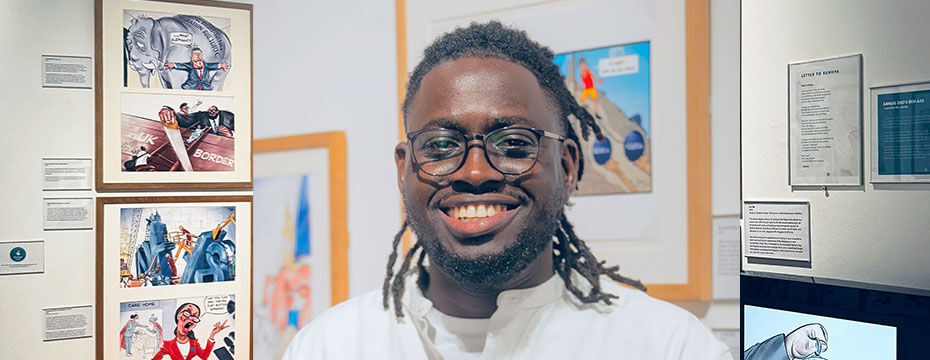
Samuel Ojo, who graduated with a postgraduate degree in Visual Communication in 2024, recently scored the exciting new role.
The graduate鈥檚 journey from Nigeria to study in 天美传媒 was a huge transition for him.
He said: 鈥淢y time at BCU was a mixture of good and bad. I came as an international student, and I came with a lot of hope. I鈥檓 from Nigeria, so the culture shock was huge.
鈥淭here were several students in our group, but I was the only one from Nigeria. In England, there were norms of how to approach a brief and in Nigeria it was different.鈥�
Samuel explained that he had to come into his new environment and unlearn a lot of what he had known previously. Essentially, re-learning how to approach situations to adapt and be successful.
He said: 鈥淢y lecturers were so helpful with that. It did slow me down and then I caught onto the groove towards the tail end of the second semester. I did question myself often: 鈥楧id I come to the right course?鈥� or 鈥榃hat am I doing wrong?鈥�. But eventually, I was able to find real joy in the course, and it was smooth sailing from there.鈥�
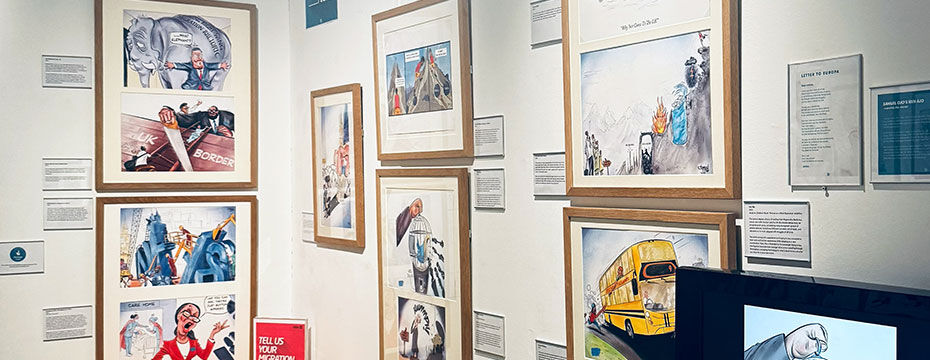
The alumnus decided to do a degree in Visual Communication because it encompassed multiple disciplines. His class had a variety of artists such as illustrators, photographers and graphic designers. His most notable project would be 脤r矛n 脌j貌, that was eventually turned into an exhibition at the Cartoon Museum in London.
He explained: "As I mentioned, it was difficult for my wife and I to transition to 天美传媒. My wife is a writer, and in our frustrations, she penned this beautiful poem about what we were going through. After reading it, I thought I could draw something to accompany the poem. Then, I shared it in class and with my tutors.鈥�
鈥淚t was then picked up to be exhibited and that鈥檚 how the project went from my wife and I to something others could relate to. 脤r矛n 脌j貌 set the tone for my practise in the UK.鈥�
Samuel admits that he never thought he was going to be an illustrator. From theatre to graphic design, he set his sights on designing and motion design. Then things suddenly changed when he got commissioned in 2016.
He said: 鈥淚 got a request to design a political cartoon about Donald Trump. I told him that I was not a political cartoonist, but the person requesting it had worked with me before, so they really trusted me. That project was one of the hardest I鈥檝e ever done in my life because it wasn鈥檛 my forte. But he loved it and suggested I make political cartooning my career.鈥�
The graduate eventually halted his previous design endeavours to concentrate on political cartooning. It also gave him an outlet to bring to light political issues happening in Nigeria. Though he didn鈥檛 think that political cartooning would be in his future, he remembered admiring comics and drawings in newspapers that his father collected and archived.
He said: 鈥淚 would describe my career as serendipitous. I say that because with my love of theatre to graphic design then to being a political catalyst is not a trajectory I have seen elsewhere. Sometimes when I think about it, I wonder how I went from here to here.鈥�
As a volunteer at the Cartoon Museum in London, Samuel explains the journey to defining his own style and studying the greats.
鈥淒ifferent cartoonists have different styles and when you鈥檙e in the industry you can tell everyone鈥檚 style apart. I am still on a path where I develop my own style. I don鈥檛 think I have found it yet, I鈥檓 still quite inspired and a big student of the greats.鈥�
His new accomplishment of working with The Guardian newspaper came about through doors that BCU opened. The alumnus would often send cold emails to company鈥檚 he admired the most.
He said: 鈥淥ne thing I picked up in school by my course leader Rob Gibb was 鈥榙on鈥檛 wait to send something鈥� and he encouraged us to just go for it.鈥�
鈥淚 sent a message to Ella Baron about one of her upcoming exhibitions. I ended up going and meeting an editor for The Guardian who wanted to see my work and suggested I submit it. It鈥檚 been a fun experience for me because now I draw more and I am published alongside my favourite cartoonists.鈥�
鈥淚n the future, I look forward to having an 脤r矛n 脌j貌 2.0 and get in touch with more galleries and museums to share it. As well, I鈥檇 love to open a gallery similar to the Cartoon Museum in Nigeria. My wife and I want to create a children鈥檚 book that talks about immigration from a child鈥檚 perspective. We want to talk about immigrant children and their experience with going to school and having to adapt.鈥�
Samuel also has advice to those following in his footsteps: 鈥淭he creative industries reward authenticity and persistence, never wait for anybody鈥檚 validation.
鈥淏e open to volunteering and collaborating, network with everyone you can and stay true to your story because that鈥檚 what will make you stand out.鈥�