Meet the Deal Or No Deal contestant turned children鈥檚 rights campaigner
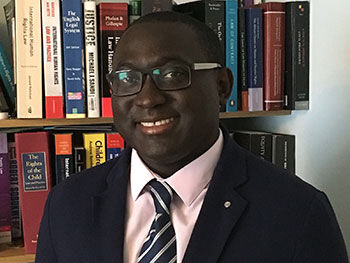
What links a popular Channel 4 game show hosted by Noel Edmonds, children鈥檚 rights in West Africa and an international consultancy company? The answer is听Lamin听Daffeh, an inspirational PhD researcher breaking down cultural barriers听to education听in his native country, The听Gambia.听
Enrolment,听attendance and retention听in African schools
尝补尘颈苍鈥檚听research looks into the cultural barriers surrounding children鈥檚 rights to education. 鈥淭he popular narrative for African children not attending school is that it鈥檚 only due to poverty,鈥�听Lamin听says. 鈥�However, it goes deeper than that. My PhD looks at the cultural influences as one of the main barriers to children鈥檚 rights to education 鈥� for example,听some people听living in indigenous听African听societies听believe that the western system of education is taking away their culture and identity. They believe that education is a luxury听enjoyed by听only听children听in London and New York.鈥�
While this issue affects both genders, female students听are particularly marginalised from attending school. 鈥淪ome parents believe that by the time girls have turned 16, they should be getting married rather than continuing with education,鈥� Lamin says.鈥�They want them out of school to help with household chores.鈥�
The benefits of education
Lamin began challenging these perceptions in 2013, when he opened a school in The Gambia. After setting up his charity, , the school now has nearly 430 pupils, provides clean drinking water and established a community farm. 鈥淎t first, there were some parents that were reluctant about their children going to school. However, I am first-hand proof that western education works,鈥澨�Lamin听explains. 鈥淚 left the village to further my education but not only that I have maintained a strong relationship with my community. I have also contributed towards enhancing education and community development projects within the rural areas. Acquiring education enabled me to help myself and support many others.鈥�听
This, alongside听community awareness projects in access to听education, is convincing locals that听the school and 尝补尘颈苍鈥檚 work is good for both boys and girls. 鈥淚t鈥檚 not about eradicating or demeaning indigenous cultures; it is about enhancing access to education and eradicating gender disparity.鈥�
Primetime viewing听听
It is hard to believe that Lamin has achieved all this and more when you consider he once left a game show with just 拢20 to his name. 鈥淭he village where 滨鈥檓 from was struggling with poor water supply and I wanted to help them, so my friend recommended I apply for Deal Or No Deal,鈥� he explains. 鈥淢y target was 拢7,000, and almost straight away the banker offered me that sum. At this point, there were still so many high sums of money available I knew I had to turn it down鈥rom there, it only went downhill.鈥�听
But while Lamin only left with a paltry amount of money, his appearance and cause won the hearts of the viewing public. 鈥淔rom my appearance, I was contacted by various people wanting to help and from that fresh start听really began to develop,鈥� he says.听
Business School support听
Alongside 尝补尘颈苍鈥檚 doctorate research in international human rights law and his charity, he has also recently set up his own consultancy company, . 鈥淔rom my charity work, I have developed a large collection of contacts, so I decided to use these to set up a consultancy company,鈥� he says.鈥淎IDER is the alliance for international development, education and research.鈥�
Lamin has successfully brought together his PhD and consultancy business interests, and says he achieved this through the help of听天美传媒鈥檚 staff. 鈥�The听School of Law have been fantastic. They told me to focus on the areas that 滨鈥檓 interested in,鈥� he says. 鈥淭here is no other place to conduct my research other than at the 天美传媒.鈥澨�